Methodology

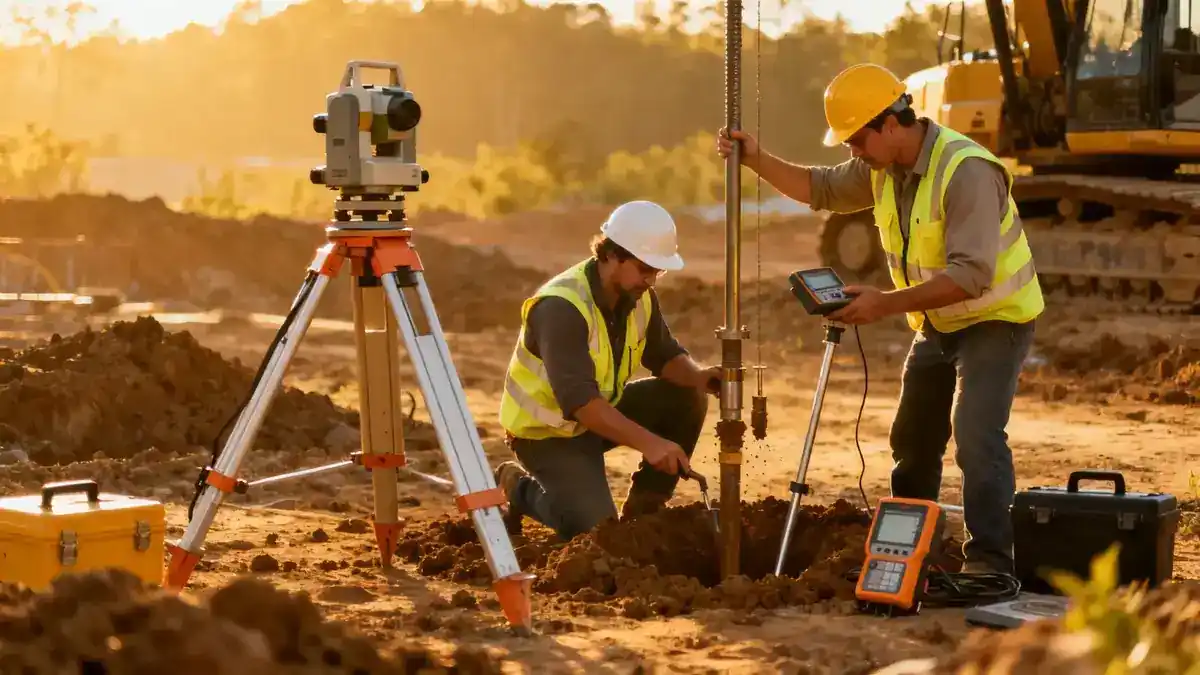
Our approach to geotechnical engineering in Akron begins with a thorough review of existing geologic maps and previous subsurface data. We then execute a site-specific exploration program, typically including spt boring with standard penetration testing (SPT) per ASTM D1586 at intervals of 1.0 to 1.5 meters to depths of 8 to 15 meters for residential structures and up to 30 meters for industrial facilities. Undisturbed tube samples are retrieved for laboratory classification, strength, and consolidation testing. Groundwater monitoring wells are installed to measure seasonal fluctuations. Data are analyzed using geotechnical software to develop site-specific parameters for foundation design, slope stability, and retaining wall analyses, all within the framework of local regulatory requirements.
Reference Technical Parameters
| Parameter | Reference Value |
|---|---|
| Predominant soil type | Glacial till (silty clay to sandy silt) with gravel |
| Maximum seismic acceleration (PGA) | 0.10g – 0.15g (MCE, Site Class C) |
| Typical groundwater level | 3 – 8 m below grade |
| Bedrock depth | 15 – 30 m (Sharon Sandstone/Cuyahoga Shale) |
| Typical N60 range | 10 – 30 (glacial till); 50+ (weathered bedrock) |
Local Considerations — Akron
Akron's glacial geology creates variable subsurface conditions. The till is often dense but can contain soft lacustrine layers near the Cuyahoga River. Groundwater is perched in till and confined in bedrock, requiring careful dewatering design. Seismic hazard is low but site amplification from soft soils must be considered per ASCE 7. Older neighborhoods may have undocumented fills; new developments on former industrial sites require environmental screening. Typical projects include residential foundations on spread footings, commercial slabs-on-grade, and retaining walls for cut slopes. For regional context, our geotechnical engineering en Chicago team addresses similar glacial settings with deeper bedrock and higher seismicity.
Request a Quote
Our team reviews your project and issues an initial report at no cost.
Or write us directly at contact@geotechnicalengineering.net
Services in Akron
Applicable Standards
- ASTM D1586
- ASCE 7-16
- International Building Code (IBC) 2021
- Ohio Building Code (OBC) 2020
- ASTM D2487 (Unified Soil Classification System)
Frequently Asked Questions
What are the typical soil types encountered in Akron?
Soils in Akron are predominantly glacial till, consisting of silty clay, sandy silt, and gravel, often overlying shale and sandstone bedrock. Lacustrine deposits with soft clays and silts are present in low-lying areas near the Cuyahoga River.
What seismic design requirements apply in Akron?
Akron is in Seismic Design Category B per ASCE 7-16, with a mapped PGA of 0.10g to 0.15g. Site-specific response spectra may be required for critical structures or soft soil sites, but standard prescriptive seismic detailing typically suffices.
Are geotechnical investigations mandatory for construction in Akron?
The Ohio Building Code (OBC) requires a geotechnical investigation for most new buildings, especially those with shallow foundations on expansive or compressible soils. The scope depends on building size, occupancy, and site geology.