Methodology
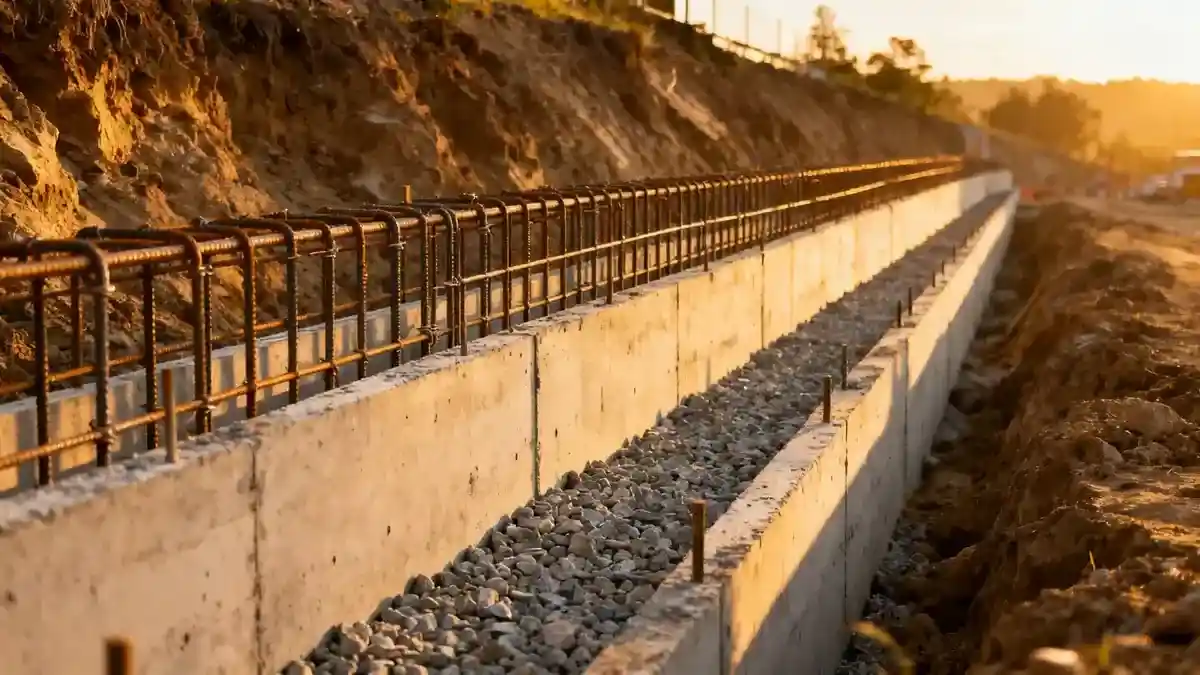
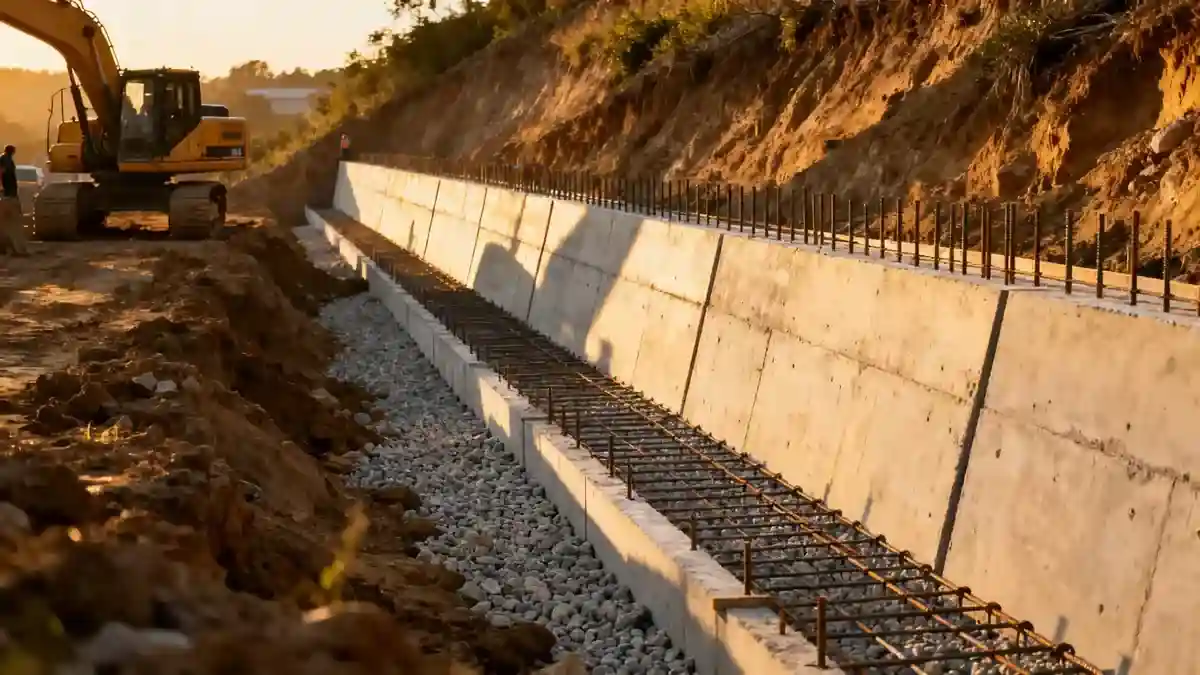
Our retaining wall design methodology follows a rigorous, multi-step process. Initially, we perform subsurface investigations using Standard Penetration Testing (SPT) per ASTM D1586 to characterize soil stratigraphy and strength parameters. Soil samples are then tested in our soil mechanics laboratory to determine shear strength, consolidation, and permeability. Using these data, we compute lateral earth pressures (active, passive, at-rest) following Coulomb or Rankine theory. Structural design is performed per ASCE 7-22 for load combinations, including seismic loads. We evaluate wall types—gravity, cantilever, sheet pile, or mechanically stabilized earth (MSE)—selecting the optimal based on height, soil conditions, and economics. Numerical modeling with finite element software validates performance under service and ultimate limit states. For slope stability integration, see our slope stability service.
Reference Technical Parameters
| Parameter | Reference Value |
|---|---|
| Maximum Wall Height | Up to 30 ft (9.1 m) |
| Design Life | 50–100 years per IBC |
| Factor of Safety (Sliding) | ≥ 1.5 |
| Factor of Safety (Overturning) | ≥ 2.0 |
| Seismic Coefficient (k_h) | 0.05–0.40 per ASCE 7 |
Local Considerations — USA
Retaining wall design in the United States must adapt to diverse geotechnical conditions. In seismic zones like Anchorage and Los Angeles, walls require dynamic analysis and reinforcement for earthquake loads. In areas with expansive clays, such as Dallas or Houston, moisture control and drainage are critical to prevent hydrostatic pressure buildup. Our team tailors each design to local soil profiles, groundwater levels, and regulatory requirements, ensuring compliance with state-specific building codes. For instance, in Akron, we address glacial till deposits, while in Albuquerque, we design for collapsible soils and high groundwater in the Rio Grande valley. This localized expertise, backed by our national presence, ensures optimal performance across all regions. For a detailed example, see our geotechnical engineering in Akron.
Request a Quote
Our team reviews your project and issues an initial report at no cost.
Or write us directly at contact@geotechnicalengineering.net
Applicable Standards
- ASTM D1586 – Standard Penetration Test (SPT)
- ASCE 7-22 – Minimum Design Loads and Associated Criteria for Buildings and Other Structures
- IBC 2021 – International Building Code
- AASHTO LRFD Bridge Design Specifications (for transportation projects)
Frequently Asked Questions
What is the typical design process for a retaining wall?
The process begins with subsurface investigation (borings, SPT, laboratory testing) to determine soil properties. Then, lateral earth pressures are calculated, and structural design is performed per applicable codes. Our team selects the wall type (e.g., gravity, cantilever) and verifies stability against sliding, overturning, bearing capacity, and seismic loads.
Which codes and standards govern retaining wall design in the USA?
Retaining wall design is governed by the International Building Code (IBC), ASCE 7 for loads, and AASHTO for transportation projects. Soil testing follows ASTM standards such as D1586. Local amendments may apply, so our designs are reviewed against state-specific building codes.
How long does a typical retaining wall design project take?
Project duration varies with complexity and site conditions. A standard design for a wall up to 20 ft high typically takes 4–6 weeks from site investigation to final design. Larger or more complex projects, including seismic analysis or deep foundations, may require 8–12 weeks.
How much does retaining wall design cost in the USA?
Costs for retaining wall design typically range from $1,050 to $4,200, depending on wall height, soil conditions, site accessibility, and the number of borings or lab tests required. This range is a 2026 reference; we recommend requesting a detailed quote tailored to your project specifics.