Methodology
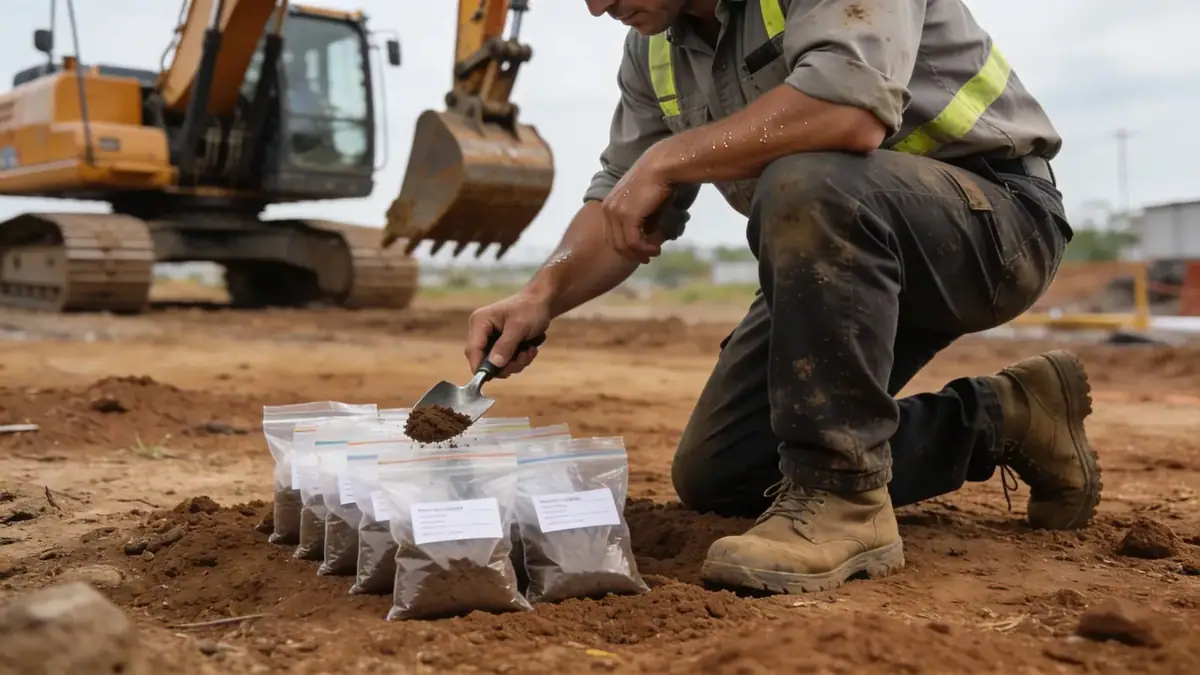
Our methodology in Cheyenne begins with a thorough review of existing geologic maps and nearby boring logs. We then conduct field investigations using spt boring to characterize subsurface stratigraphy and obtain soil samples for laboratory testing. Sampling intervals follow ASTM D1586 at 1.5 m depth increments. Laboratory tests include index properties, consolidation, and shear strength to develop soil parameters for design. We integrate these data with site-specific seismic hazard analysis per ASCE 7 to produce a comprehensive geotechnical report.
Reference Technical Parameters
| Parameter | Reference Value |
|---|---|
| Predominant soil type | Claystone and sandstone with interbedded siltstone |
| Maximum seismic acceleration (PGA) | 0.15g (for 2% probability of exceedance in 50 years) |
| Typical groundwater level | 3 to 6 m below ground surface |
| Bedrock depth | 5 to 15 m |
| Typical N60 range | 10 to 40 blows per 0.3 m |
Local Considerations — Cheyenne
Cheyenne's geology is dominated by the Laramie Formation, consisting of claystone, sandstone, and siltstone. Expansive soils are common, requiring careful moisture management and foundation design. The area has moderate seismicity; per ASCE 7-16, the mapped spectral acceleration at short periods (Ss) is approximately 0.3g. Groundwater is typically deep but can be perched in clay layers. Local experience with frost depth (1.2 m) is critical for shallow foundations. For regional context, our team also provides geotechnical engineering en Denver services.
Request a Quote
Our team reviews your project and issues an initial report at no cost.
Or write us directly at contact@geotechnicalengineering.net
Services in Cheyenne
Applicable Standards
- ASTM D1586
- ASCE 7-16
- IBC 2021
- Wyoming Department of Transportation Standard Specifications
Frequently Asked Questions
What soil types are commonly encountered in Cheyenne?
Cheyenne's subsurface typically consists of claystone, sandstone, and siltstone from the Laramie Formation. These materials can be expansive and may require special foundation treatments such as drilled piers or moisture control measures.
Are seismic considerations important for foundations in Cheyenne?
Yes. Cheyenne is in seismic design category C per ASCE 7-16, with a peak ground acceleration of about 0.15g. Site-specific response analysis may be required for critical structures to ensure adequate performance during earthquakes.
Do I need a geotechnical investigation for my Cheyenne project?
Most building permits in Cheyenne require a geotechnical report per IBC Chapter 18. Even for small projects, understanding soil bearing capacity and frost depth is essential to avoid structural issues. Our firm provides cost-effective investigations for all scales.