Methodology
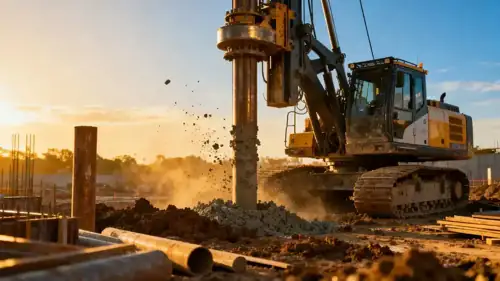
Our methodology for geotechnical engineering in Hartford Connecticut begins with a detailed review of existing geological maps and historical borehole data from the Connecticut Department of Energy and Environmental Protection. We then conduct field investigations, including standard penetration testing (SPT) per ASTM D1586, to characterize soil stratigraphy and strength. Our team employs continuous sampling techniques for soft soils and installs piezometers to monitor groundwater levels. Laboratory testing follows, focusing on index properties, consolidation, and shear strength parameters. This integrated approach allows us to develop site-specific recommendations for foundation design, slope stability, and earth retention. For more on our field methods, see our spt boring service.
Reference Technical Parameters
| Parameter | Reference Value |
|---|---|
| Predominant soil type | Glacial till, stratified drift, alluvial deposits |
| Maximum seismic acceleration (PGA) | 0.15–0.20 g (ASCE 7, Seismic Design Category B) |
| Typical groundwater level | 3–6 m below ground surface |
| Bedrock depth | 15–30 m in valley; shallower in uplands (5–10 m) |
| Typical N60 range (SPT) | 8–25 blows/0.3 m for glacial till; 4–12 for alluvial soils |
Local Considerations — Hartford Connecticut
Hartford Connecticut’s geology varies significantly between the Connecticut River floodplain and the adjacent uplands. In downtown Hartford, thick alluvial deposits require deep foundations or ground improvement, while bedrock is shallow in western suburbs like West Hartford. The local building code, based on the 2022 Connecticut State Building Code, adopts ASCE 7-16 seismic provisions. Projects near the river must account for liquefaction potential in loose sands. Our team is familiar with Hartford’s permitting process and has extensive experience with brownfield redevelopment and historic district constraints. For detailed analysis of earth retention systems, see our retaining wall design service. As the primary hub, our geotechnical engineering in New York office supports regional projects.
Request a Quote
Our team reviews your project and issues an initial report at no cost.
Or write us directly at contact@geotechnicalengineering.net
Services in Hartford Connecticut
Applicable Standards
- ASTM D1586 (Standard Penetration Test)
- ASCE 7-16 (Minimum Design Loads for Buildings)
- 2022 Connecticut State Building Code
- Eurocode 7 (for international projects)
Frequently Asked Questions
What are the typical soil conditions in Hartford Connecticut?
Hartford’s soils consist mainly of glacial till and stratified drift, with deep alluvial deposits in the river valley. Groundwater is typically encountered at 3–6 meters. Bedrock depth ranges from 5–30 meters, requiring site-specific investigation for foundation design.
Is seismic design required for projects in Hartford Connecticut?
Yes, Hartford is in Seismic Design Category B per ASCE 7-16, with a mapped spectral acceleration S_S of about 0.2g. Seismic considerations, including liquefaction potential in loose sands, are necessary for most structures, especially those near the Connecticut River.
Are geotechnical studies mandatory for construction in Hartford Connecticut?
The Connecticut State Building Code requires a geotechnical investigation for most new structures, particularly those with deep foundations or in areas with known soil hazards. Local regulations may also mandate reports for brownfield redevelopment and slope stability.