Methodology
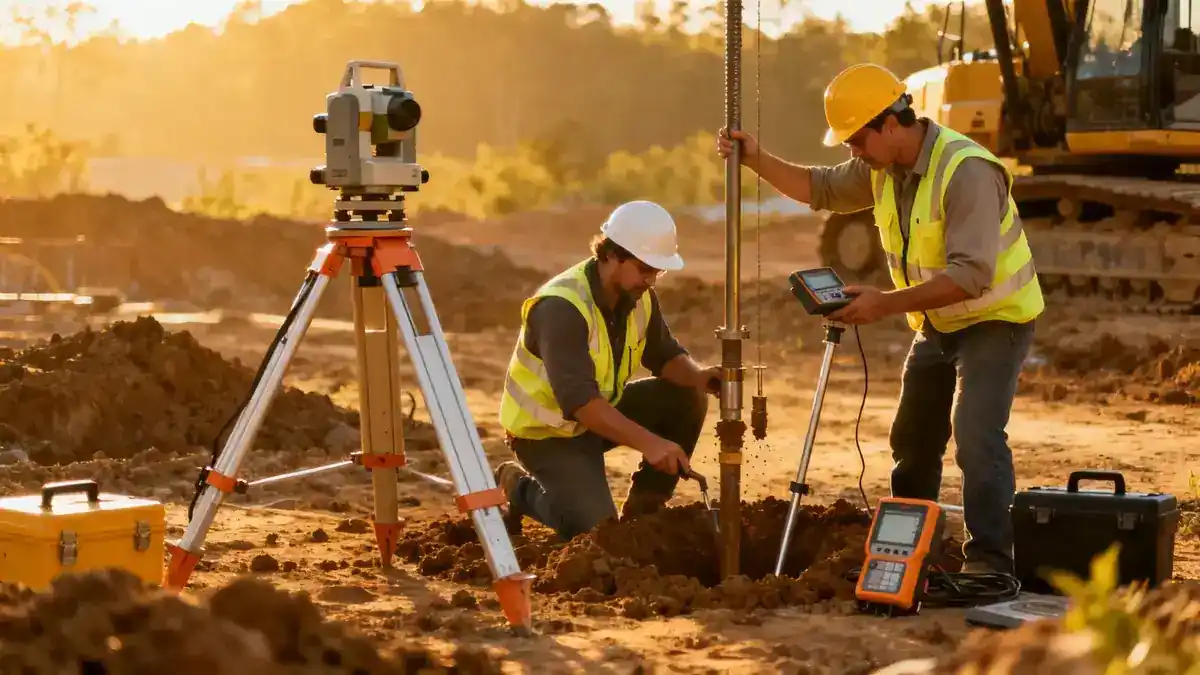
Our methodology for geotechnical engineering in Ontario California begins with a comprehensive review of existing geologic maps and seismic hazard data. We then conduct field investigations including spt boring to assess soil stratification and strength, supplemented by cone penetration tests where continuous profiling is needed. Laboratory testing on recovered samples follows ASTM standards to evaluate index properties, consolidation behavior, and shear strength. We integrate these data into analytical models to address settlement, liquefaction potential, and lateral earth pressures. This systematic approach supports rational foundation and earthwork designs for Ontario's diverse projects.
Reference Technical Parameters
| Parameter | Reference Value |
|---|---|
| Predominant soil type | Silty sands and gravelly clays (alluvial fan deposits) |
| Maximum seismic acceleration (PGA) | 0.50g to 0.60g (ASCE 7-16 risk-targeted MCE) |
| Typical groundwater level | 10 to 25 feet below ground surface (seasonal variation) |
| Bedrock depth | 500 to 1000+ feet (deep sedimentary basin) |
| Typical N60 range (SPT) | 10 to 40 blows per foot (variable with depth and location) |
Local Considerations — Ontario California
Ontario California sits on the alluvial fan of the San Gabriel Mountains, underlain by deep Quaternary deposits. The primary geotechnical challenges include: (1) shallow groundwater in the western areas near the Cucamonga Creek, requiring dewatering considerations; (2) variable soil density and compressibility across the city, with older alluvium in the north and younger, looser deposits in the south; (3) high seismic hazard due to the San Andreas and San Jacinto faults, with peak ground accelerations exceeding 0.50g; (4) potential for liquefaction in water-saturated sandy layers during a major earthquake; (5) presence of undocumented fill in redeveloped industrial parcels. For broader context, our geotechnical engineering en Los Angeles experience informs our approach regionally. We integrate these factors into site-specific recommendations, often recommending deep foundations or ground improvement in liquefaction-prone zones. Our team conducts thorough slope stability analyses for sites near the alluvial fan margins.
Request a Quote
Our team reviews your project and issues an initial report at no cost.
Or write us directly at contact@geotechnicalengineering.net
Services in Ontario California
Applicable Standards
- ASCE 7-16 Minimum Design Loads and Associated Criteria for Buildings
- California Building Code (CBC) 2022
- ASTM D1586 Standard Test Method for Standard Penetration Test (SPT)
- ASTM D2487 Standard Practice for Classification of Soils for Engineering Purposes
- California Geological Survey (CGS) Seismic Hazard Zone Maps
Frequently Asked Questions
What types of soil are commonly found in Ontario California?
Ontario's soils are predominantly alluvial sands and silts with variable gravel and clay content. These deposits originate from the San Gabriel Mountains and exhibit significant spatial variability. In the southern industrial areas, loose sands and soft clays are common, while northern residential zones often feature denser alluvium.
How does the seismic hazard in Ontario California affect geotechnical design?
Ontario lies in a high seismic zone with PGA values up to 0.60g. Design must account for potential liquefaction of loose saturated sands, lateral spreading, and fault rupture. Site-specific seismic hazard analyses per ASCE 7 are required to determine design spectra and soil amplification factors.
Are geotechnical studies mandatory for construction in Ontario California?
Yes, most building permits require a geotechnical report per CBC Chapter 18. For residential projects, a preliminary soil investigation is typically needed, while commercial and industrial developments necessitate comprehensive subsurface exploration, laboratory testing, and engineering analysis for foundation and earthwork design.