
Methodology
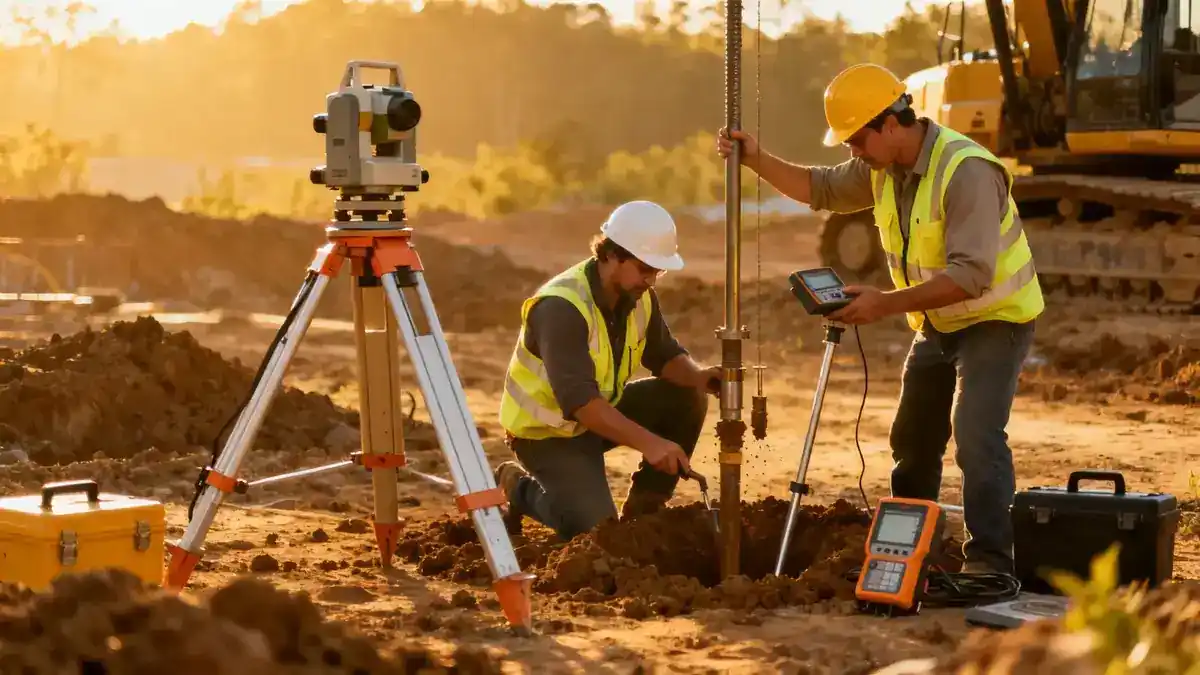
Our approach to geotechnical engineering in Pasadena California begins with a comprehensive review of existing geologic maps and seismic hazard data. We then conduct a targeted field investigation using spt boring to obtain disturbed and undisturbed samples at planned depths, following ASTM D1586 for standard penetration tests. In the laboratory, we perform index property tests (moisture content, Atterberg limits, grain size distribution) and strength tests (direct shear, unconfined compression). For hillside developments, slope stability analyses using limit equilibrium methods are integrated with seepage modeling. All data are synthesized into a geotechnical report that includes foundation recommendations, seismic site classification per ASCE 7, and construction considerations tailored to Pasadena's unique conditions.
Reference Technical Parameters
| Parameter | Reference Value |
|---|---|
| Predominant Soil Type | Alluvial sands, silts, and clays with gravel lenses |
| Maximum Seismic Acceleration (PGA) | 0.4g to 0.6g (ASCE 7 Site Class D) |
| Typical Groundwater Level | 10 to 30 ft below grade (variable seasonally) |
| Bedrock Depth | 50 to 200 ft (Tertiary sedimentary and crystalline basement) |
| Typical N60 Range | 5 to 40 blows/ft (sands); 2 to 15 blows/ft (clays) |
Local Considerations — Pasadena California
Pasadena's geology is dominated by Quaternary alluvium from the San Gabriel Mountains, with variable grain sizes and occasional cobble layers. The Raymond Fault traverses the city, imposing special seismic design requirements per the California Building Code. Groundwater is shallow near the Arroyo Seco but deepens toward the foothills. We have observed that hillside properties on the north side often require slope stability analyses and retaining wall designs, while flatland sites may face liquefaction potential in loose sands. Our team routinely coordinates with the City of Pasadena's building department to ensure compliance with local grading ordinances and seismic regulations. For broader context, our geotechnical engineering en Los Angeles team supports regional projects with consistent methodology.
Request a Quote
Our team reviews your project and issues an initial report at no cost.
Or write us directly at contact@geotechnicalengineering.net
Services in Pasadena California
Applicable Standards
- ASTM D1586 (Standard Penetration Test)
- ASCE 7 (Minimum Design Loads for Buildings and Other Structures)
- California Building Code (CBC) Chapter 18
- City of Pasadena Municipal Code – Grading and Excavation
Frequently Asked Questions
What soil types are commonly found in Pasadena?
Pasadena's subsurface consists primarily of alluvial sands, silts, and clays deposited by seasonal streams from the San Gabriel Mountains. Gravel lenses and cobbles are common near the mountain front. In the southern flatlands, older alluvium with higher clay content is typical. These variations require site-specific investigation to determine bearing capacity and settlement behavior.
Does Pasadena have specific seismic design requirements?
Yes. Pasadena lies near the Raymond Fault and is subject to strong shaking. The California Building Code assigns Seismic Design Category D or E for most sites. Geotechnical reports must include site class determination per ASCE 7, liquefaction assessment for loose saturated sands, and fault rupture hazard evaluation for properties near active traces.
Are geotechnical studies mandatory for all construction in Pasadena?
For most new buildings, additions exceeding 50% of existing floor area, and hillside developments, the City of Pasadena requires a geotechnical investigation. Even for smaller projects, a geotechnical report is strongly recommended to avoid costly repairs from differential settlement or slope instability. Our firm helps clients navigate these requirements efficiently.