Methodology

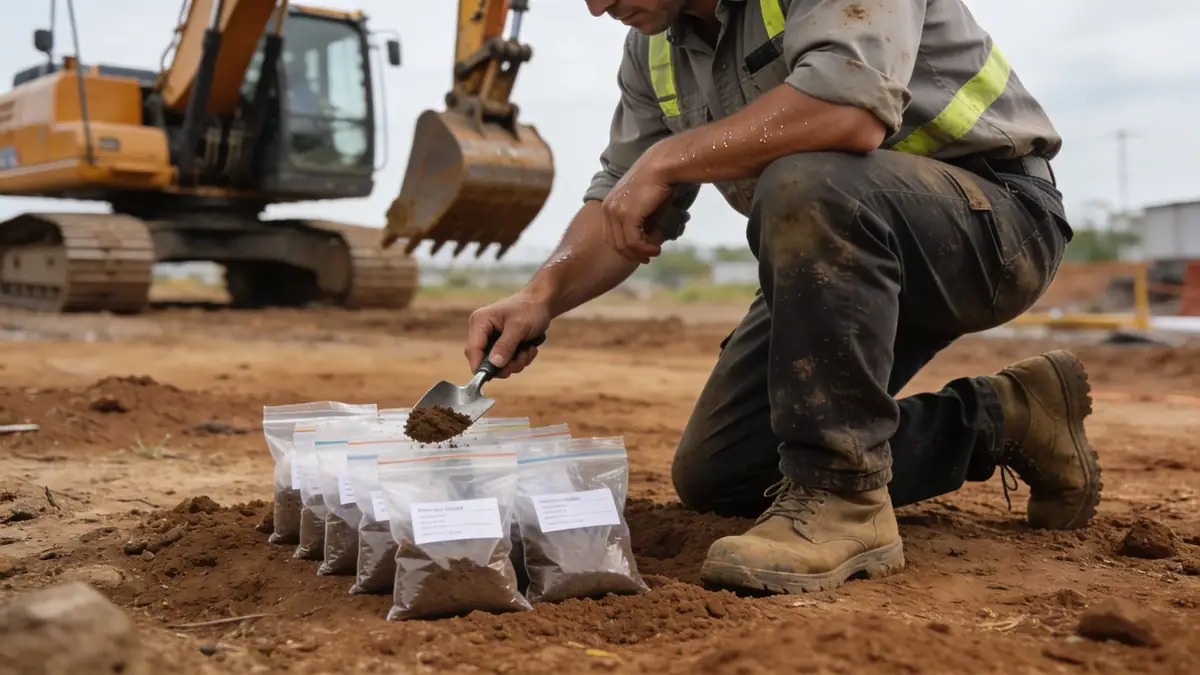
Our methodology for geotechnical engineering in St Louis begins with a thorough desk study of regional geology and existing borehole records. We then conduct field investigations, including spt boring in accordance with ASTM D1586, to characterize soil strata at depths up to 30 m. Soil samples are retrieved for laboratory classification and strength testing. We integrate seismic hazard analysis per ASCE 7-16 to determine site class and design spectral accelerations. Groundwater monitoring wells are installed where needed. All data are synthesized into a geotechnical report that outlines foundation recommendations, earthwork parameters, and construction considerations specific to St Louis conditions.
Reference Technical Parameters
| Parameter | Reference Value |
|---|---|
| Predominant soil type | Alluvial silty clay, loess, and glacial till over limestone bedrock |
| Maximum seismic acceleration (PGA) | 0.15g to 0.25g (ASCE 7-16, Site Class D) |
| Typical groundwater level | 3 to 8 m below ground surface (local variations) |
| Bedrock depth | 10 to 30 m (limestone/dolomite) |
| Typical N60 range (SPT) | 5 to 30 blows/0.3 m (clay to dense sand/gravel) |
Local Considerations — St Louis
St Louis lies within the New Madrid Seismic Zone, requiring site-specific seismic hazard evaluations per ASCE 7-16. The city's geology is dominated by Mississippi River alluvium, loess hills in the north, and karstic limestone in the south. Groundwater levels fluctuate with the river stage, posing challenges for excavations and below-grade structures. Infilled channels and former industrial sites necessitate careful contamination assessment. Our soil mechanics laboratory supports projects with tailored testing, including consolidation and direct shear. For comprehensive geotechnical solutions, we also collaborate with our geotechnical engineering en Chicago team on regional projects.
Request a Quote
Our team reviews your project and issues an initial report at no cost.
Or write us directly at contact@geotechnicalengineering.net
Services in St Louis
Applicable Standards
- ASTM D1586 (Standard Penetration Test)
- ASCE 7-16 (Minimum Design Loads and Associated Criteria for Buildings)
- International Building Code (IBC 2021)
- City of St Louis Building Code (Chapter 18, Soils and Foundations)
- OSHA 29 CFR 1926 (Excavation Safety)
Frequently Asked Questions
What are the predominant soil types encountered in St Louis?
St Louis soils are primarily alluvial silty clays and sands from the Mississippi River, overlain by loess in upland areas. Glacial till and weathered limestone bedrock are common at depth. Karst features (sinkholes) occur in the southern parts, requiring careful subsurface investigation.
Is St Louis located in a seismic zone?
Yes, St Louis is within the New Madrid Seismic Zone, classified as Seismic Design Category C or D per ASCE 7. Site-specific ground motion analysis is often required for critical structures. The probability of a major earthquake is low but significant enough to influence foundation design.
Are geotechnical studies mandatory for construction in St Louis?
The City of St Louis Building Code requires a geotechnical report for most commercial and multi-family residential projects. The report must address soil bearing capacity, settlement, groundwater, and seismic site class. Single-family homes may be exempt, but site conditions may still necessitate investigation.